How Does Artificial Intelligence Contribute to Personal Protective Equipment (PPE) Detection?
This blog post explains how artificial intelligence plays an effective role in Personal Protective Equipment (PPE) detection and its contributions to occupational health and safety processes. It describes how ISEE-CAM’s AI-based object detection technology enables automatic monitoring of PPE usage, instant alerts in cases of missing or incorrect equipment, and the creation of safer and more sustainable working environments to prevent workplace accidents.
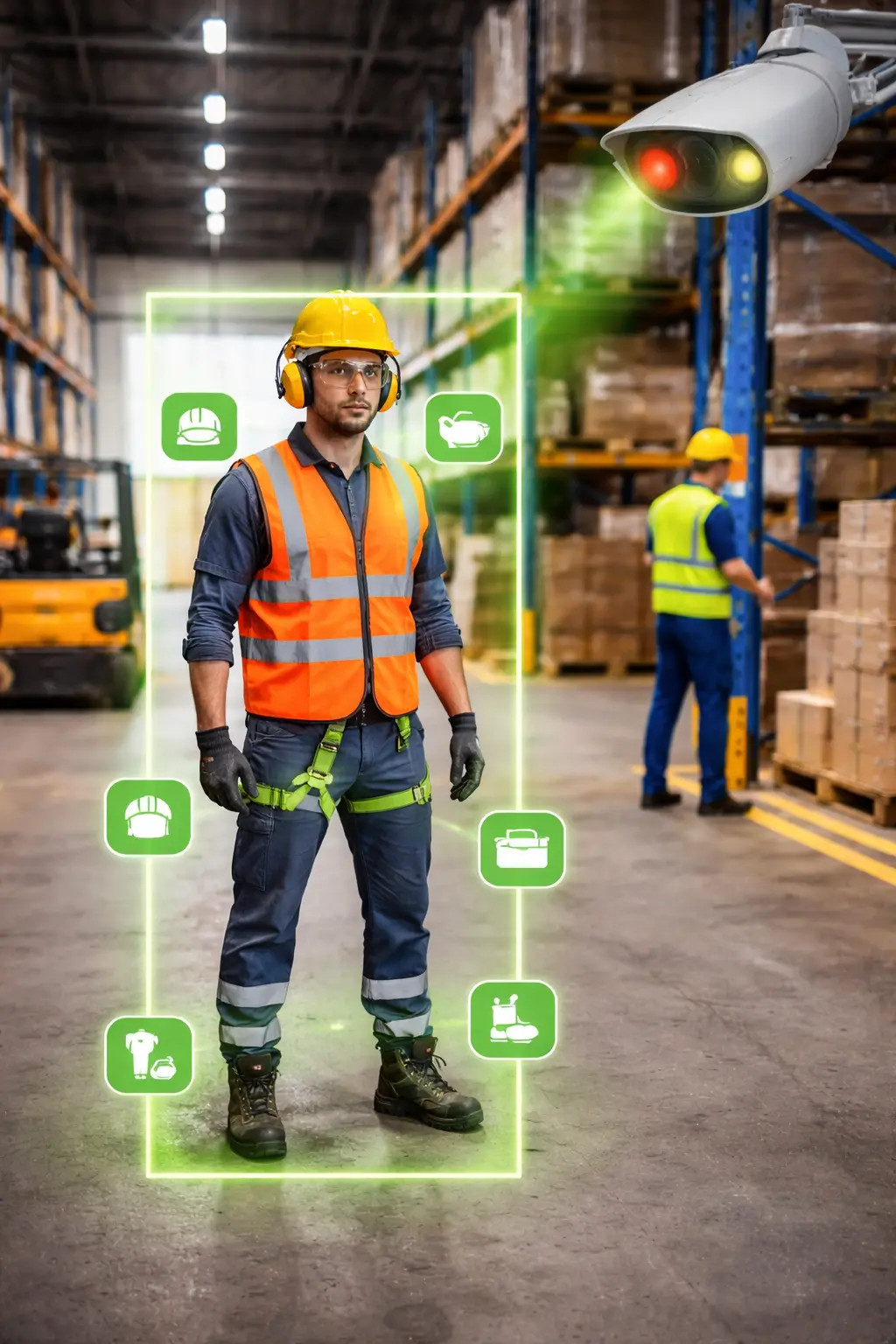
Occupational health and safety of factory workers is a critically important issue. Accidents that may occur in working environments can seriously threaten human life. For this reason, there are certain rules and guidelines that employees must follow within the scope of occupational health and safety regulations. Especially in high-risk sectors such as mining, these measures not only reduce life-threatening risks but also largely prevent limb loss, trauma, and occupational diseases. Therefore, the role of occupational safety professionals in factories is extremely critical. The precautions that these experts want to implement in areas they consider risky must be fully enforced by factory management.
One of the most effective and cost-efficient solutions in occupational health and safety is the use of Personal Protective Equipment (PPE). PPE includes helmets, reflective vests, work gloves, safety shoes, goggles, earmuffs, masks, and safety harnesses. These equipment play a critical role in ensuring employee safety. Artificial intelligence technology also holds an important place in this field. AI goes through a process similar to a baby’s development, learning to recognize and distinguish PPE equipment. This learning process is carried out using sample photographs taken from different angles, under various lighting conditions, and in different positions. These factors accelerate the development of AI, and when managed correctly, the ability to solve real-life problems using data obtained during the testing phase increases significantly.
By integrating AI-based Object Detection into the core of our ISEE-CAM cameras, we make preliminary preparations for solutions to possible scenarios. Object Detection not only detects objects, but if AI has learned more than one object, it also determines their classes and identifies their locations in images. Having the locations of objects defined enables support for methods that require object positions, such as tracking systems and counters.
At the end of the processes, ISEE-CAM can detect whether employees are wearing helmets, reflective vests, goggles, safety shoes, trousers, earmuffs, work gloves, and safety harnesses in working areas where PPE is required. In cases of missing or incorrect usage, it can generate alarms as defined by the customer. ISEE-CAM Mode 21 handles these situations. For detailed product information, you can review our page.